
Why Do We Run From Love?
 admin
Aug 26, 2026
114
0
admin
Aug 26, 2026
114
0
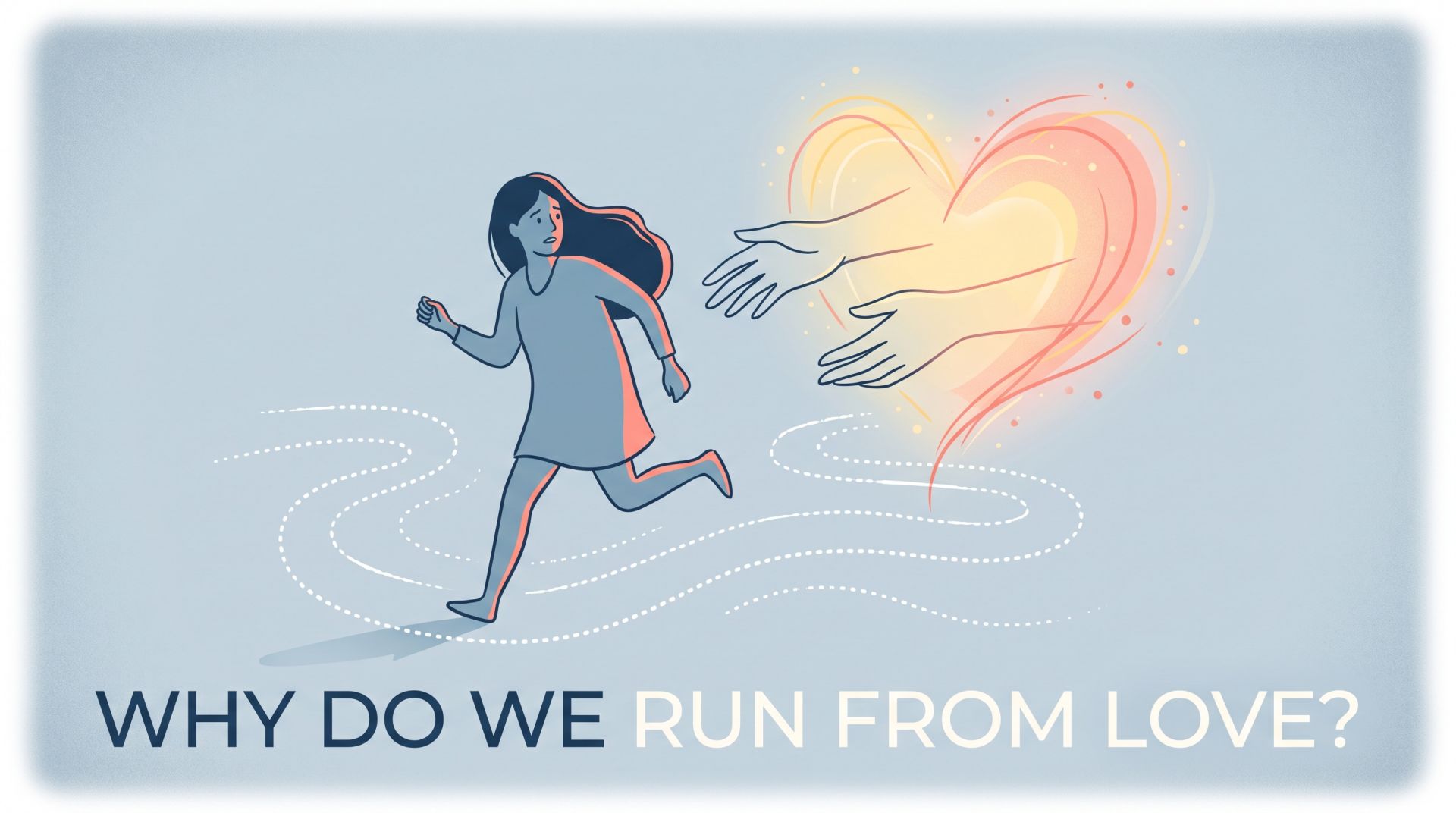
Learning to risk love when fear tells us to run
Have you ever looked at your own attachment style? A good book I’ve been listening to on this topic is
by Amir Levine and Rachel Heller. It talks about the basic styles in romantic attachments, but I reckon it can also apply to our platonic relationships.
One of the attachment styles the book discusses in depth is avoidant attachment. According to the
, almost a quarter of us have an avoidant attachment style. It’s the most common of what are known as the insecure attachment styles. The other two are anxious and disorganized (or fearful-avoidant).
But I think our tendency to avoid love goes deeper than attachment style.
Why do so many of us run away from love? Whether it’s romantic love, the love of our family, or the love of dear friends, why do we run from what’s good for us?
I used to believe that humans are inherently sinful. We were born that way because of what Adam and Eve did in the Garden by eating the forbidden fruit. I no longer believe that we’re inherently sinful. My life experience and a different understanding of the Gospel now tell me that my former view is wrong. I still think we’re sinful; you would have to walk around with your eyes shut to deny that. But it doesn’t tell the whole story. We are also made with inherent dignity, the dignity given to us by the Creator of the universe. That’s what defines us.
The fact is that every one of us is a bundle of contradictions. Each of us is capable of both great good and great evil. Sometimes we embrace love with all the courage in the world, and other times we run from it out of sheer terror.
that most people lead lives of quiet desperation. If we’re honest with ourselves, many of us, deep down, don’t believe we’re really worth loving. So we sabotage something that’s really good, or we isolate ourselves when we’ve been invited to an event with good people who love us.
There is a profound
where Peter and his companions haul in an enormous number of fish after Jesus told him to put his net over the other side of the boat. Peter is not astonished at the unbelievable number of fish he has just caught; he is astonished by the unbelievable generosity that Jesus shows him. He is so astonished that he can’t handle it. He tells Jesus to go away, “for I am a sinful man.”
Peter expresses the deep-down belief for many of us that we don’t deserve such outrageous love, especially when we haven’t done anything to earn it. But Jesus believes in Peter, knowing that Peter will stuff up (as he does later on, big time). Jesus says, in effect, “No, I want you, with all your flaws, all your faults. Because I love you. In fact, you’re going to be the leader of this movement when I leave this planet.” And Peter does, knowing his own weaknesses, but trusting in the love he has been given.
I heard a preacher say once that one of our biggest regrets at the end of life will be that we didn’t take more risks. We spend our lives turning ourselves away from love, keeping ourselves safe from hurt. Self-protection is often the opposite of loving involvement with others. Love is always risky; by its very nature, it is open to hurt because it might not be returned. But, to
, love anyway.
Out of the cocoon and into life
that we can lock ourselves away in our comforts, safe from the world. In that cocoon we won’t be hurt, we won’t need to take any risks, and we can be sure that we will be safe. But in that cocoon you will slowly die; you will slowly rot away from who you really are, because you won’t know the freedom of living. When you love, you will be hurt, but you will be alive. As
, a heart that hurts is a heart that beats.
We so often spend our lives running from love and into the hell of our own loneliness. I do it so often I don’t even realize it. I don’t want to get hurt; I can’t bear the pain of rejection. But when I remember that love is the only way forward, and that I don’t need to prove my worth to anyone because I’m already loved, I can then love others and be ok when that love isn’t returned. That’s not to say it doesn’t hurt; it does, and I hate it. But I can cope.
Why do we walk away? Why do we run from love? There’s something in us that doesn’t want to take that risk. But when we do, when we move forward in courage, we will be ok even if that love is not returned, or even if it’s thrown back in our face.
We love because God first loved us
. That’s the incredibly fortunate position you’re in. You don’t have to make the first move. It’s already been done for you. You have nothing to prove. You already have what you crave; you just need to accept it. And when you reject that love, you can get up again because it never leaves you. Nothing can take it away.
the arc of the moral universe is long, but it bends toward justice. It also bends towards hope and love.
I refuse to believe we’re a meaningless bundle of atoms in the cosmic dark. I believe there is purpose in this universe, despite the hatred, despite the lies, despite the despair, despite my brokenness, despite my lies, despite my judgmentalism, my fear, my resentments, and my demand for affirmation.
God help us to run into the arms of love, and to not be afraid to be held, to be weak, not afraid to give up the illusion of control. God help us to not run from love, but to surrender to it.












Comments (0)
Facebook Comments (0)