
Pentecost and The True Nature of God
 admin
Sep 10, 2026
151
0
admin
Sep 10, 2026
151
0
During my years as a pastor, I became fascinated by the art of communication.
Part of my role involved speaking regularly, but it did not take long for me to realise that communication is about far more than standing up and saying words. The real challenge is whether anyone actually understands and connects with what you are trying to say.
That may sound obvious, but when I realised this, it changed everything.
I began studying politicians, broadcasters, and even stand-up comedians. At first glance, they seem to inhabit very different worlds, yet the best communicators all understand the same principle: know your audience.
Who are they? What matters to them? What examples will connect? What language do they naturally think in?
The same message in one place can fall completely flat in another if it is delivered in a way that does not resonate with the people listening. Over time, I came to understand that successful communication is not simply about speaking clearly. It is about making yourself understandable.
That is why one small detail in the story of Pentecost has always struck me as profoundly significant.
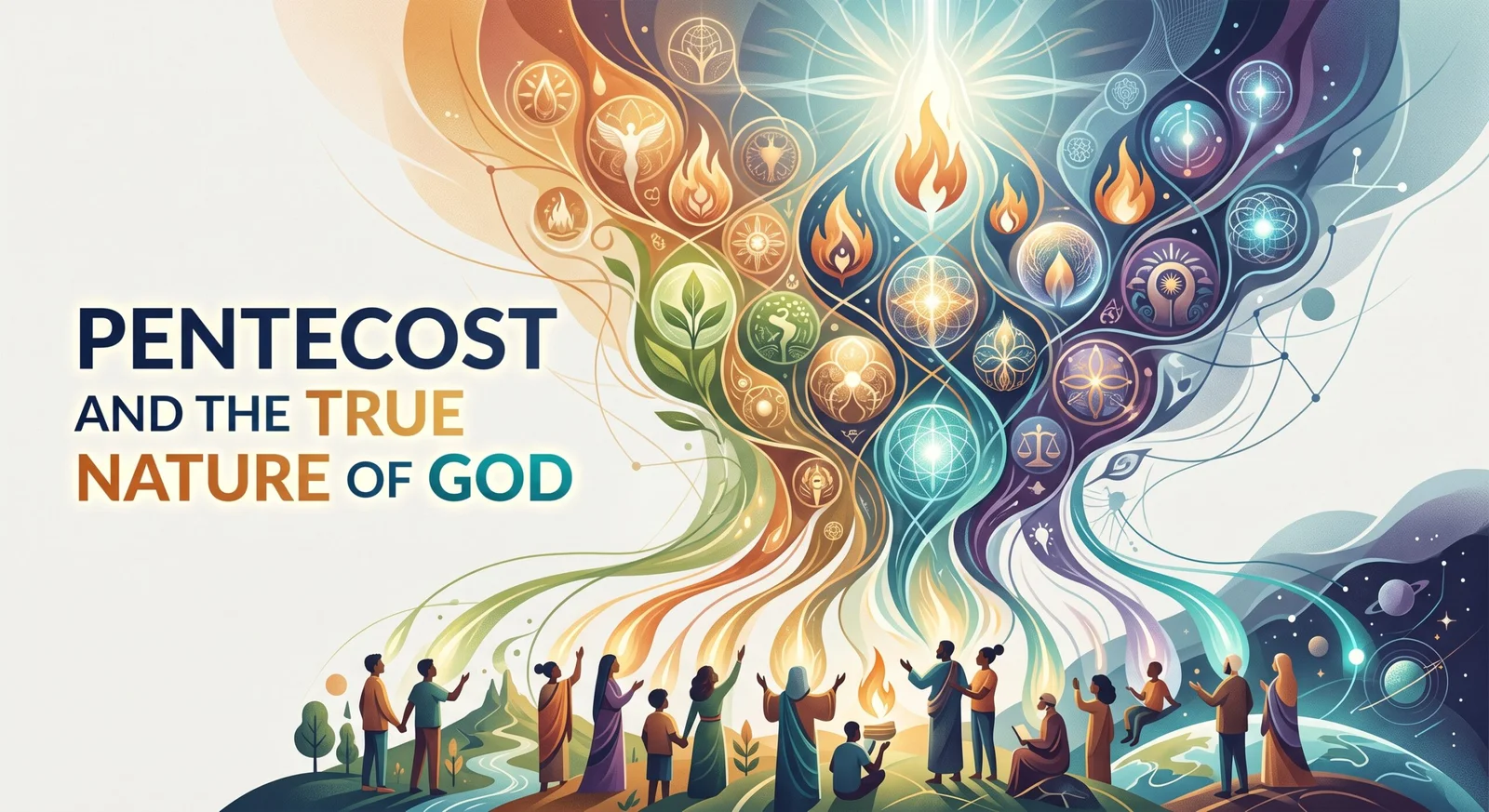
Most people focus on the dramatic elements of the story: the sound of a rushing wind, tongues of fire, and disciples suddenly speaking in other languages. All of that is extraordinary, but the most important detail may be found in the reaction of the crowd.
“How is it that each of us hears them in our own native language?”
That single sentence changes the whole story.
The true miracle of Pentecost is not merely that the disciples spoke.
It is that people understood.
The Detail We Often Miss
The story appears in Acts, chapter 2. The disciples are gathered in Jerusalem during the Jewish festival of Pentecost when the Holy Spirit comes upon them. They begin declaring what Luke calls “the mighty works of God”, and a crowd quickly gathers to see what is happening.
Luke then provides one of the most remarkable lists in the New Testament: Parthians, Medes, Elamites, residents of Mesopotamia, Judea, Cappadocia, Pontus, Asia, Phrygia, Pamphylia, Egypt, Libya, Rome, Crete, and Arabia.
In other words, people from across the known world.
Different cultures, histories, accents, and mother tongues are all represented in Jerusalem on that day. Yet each person hears the same message in language that feels native to them.
Not translated into some official religious dialect.
Not reduced to a single universal language.
But heard in the language of home.
That is the hidden detail.
And it reveals something profound about the nature of God.
Not Uniformity, but Understanding
We often assume that unity requires sameness. If everyone could think alike, speak alike, and agree on everything, perhaps peace would finally emerge.
Pentecost presents a very different vision.
God does not erase difference; he speaks through it.
The miracle does not abolish cultural diversity but actually honours it. Every language becomes a vessel capable of carrying the mighty works of God. The Spirit does not erase human distinctiveness. Instead, he makes genuine understanding possible in the midst of it.
This is a very different kind of miracle, and perhaps a far more difficult one.
Creating sameness is relatively easy. Creating understanding across genuine difference is much harder.
Yet that is precisely what happens at Pentecost.
Babel Revisited
To appreciate how radical this is, we need to look back to the story of the Tower of Babel.
In Genesis 11, humanity speaks one language and decides to build a tower “to make a name for ourselves.” The project represents human pride and a desire for unity on purely human terms. God responds by confusing their language, and the people are scattered across the earth.
For years, I assumed that Pentecost simply reversed Babel. And while that is partly true, it is not the whole story.
At Babel, one language is fractured into many. But at Pentecost, many languages are not reduced back into one. Diversity remains intact. What changes is that understanding becomes possible once again.
This is an important distinction.
God does not solve the problem by erasing human differences. He solves it by making communication possible within those differences.
Pentecost is not a return to uniformity.
It is the birth of unity in diversity.
Luke’s Remarkable List
Luke’s long catalogue of nations that were in attendance at Pentecost can feel like one of those passages we skim over on our way to the “important” part of the story.
But the list is the important part.
It stretches from east to west, north to south, symbolically gathering the known world into Jerusalem. Representatives from across the ancient world hear the same message in their own languages.
The Church is therefore multicultural from the moment it is born.
This is not a later development; it is part of the original design.
Christianity begins with the assumption that the good news is translatable. It is not tied to one sacred language or one cultural expression. The message can be faithfully communicated in the languages and customs of ordinary people across the world.
That is an extraordinary idea.
A Pattern That Shaped Christianity
This principle runs throughout the New Testament and reaches its clearest expression in the ministry of Paul the Apostle.
Paul famously wrote, “I have become all things to all people so that by all possible means I might save some.”
This is sometimes misunderstood as compromise, but it is really an expression of deep respect.
Paul recognised that people hear differently. What resonates with one group may sound strange or inaccessible to another. Effective communication requires entering another person’s world and learning how they understand reality before you can speak within it.
In other words, Paul was practising the logic of Pentecost.
The message remains the same.
The language changes.
Where the Church Sometimes Gets It Wrong
One of the ironies of Christian history is that the Church has not always remembered the foundational lesson of Pentecost.
Sometimes we expect people to learn our language before they can hear the gospel. We develop theological jargon, denominational shorthand, and insider vocabulary, then wonder why newcomers feel excluded.
People can sit through an entire sermon and leave without understanding what was actually being said.
Pentecost suggests that this misses something fundamental. God does not wait for people to master religious terminology. He meets them where they are.
He speaks in words they can understand.
That may be one of the most beautiful truths in the New Testament.
More Than Language
Of course, this principle extends far beyond spoken words.
Each of us carries our own language in a broader sense. We have different backgrounds, assumptions, experiences, and ways of making sense of the world. Medium’s comment sections are fascinating for this reason.
The same truth may need to be expressed differently depending on who is listening.
Parents know this instinctively. Teachers know it. Writers learn it. Pastors discover it quickly if they want to connect.
Anyone who has attempted to explain something important to a loved one knows that communication is as much about listening as it is about speaking.
Pentecost suggests that God understands this better than anyone. He does not broadcast a generic message from a distance and hope that people work it out.
He speaks in ways that feel intelligible, familiar, and deeply personal.
The Hidden Detail
The hidden detail in the story of Pentecost is not simply that the disciples spoke in tongues.
It is that every person is heard in their own native language.
The miracle was not a linguistic spectacle. It was understanding. That small observation changes the emotional feel of the entire story.
The first great act of the Spirit in the life of the Church is not to make everyone the same. It is to ensure that people from profoundly different backgrounds can genuinely understand what God has done.
The Church begins, in a sense, with people saying:
“I can hear this.”
Still Happening Today
My interest in communication eventually extended to writing. I have spent the past few years exploring how to connect through the written word in a way that people can understand, even if they do not always agree.
The longer I write, the more convinced I become that good communication is actually one of the most loving things we can offer another person.
To speak in a way someone can genuinely hear requires patience, humility, and empathy. It demands that we step outside our own assumptions and ask what it might be like to inhabit another person’s world.
That is true in writing.
It is true in ministry.
It is true in marriage, friendship, and ordinary conversation.
And according to Pentecost, it is also true of God.
He does not insist that we become someone else before we can understand him.
He meets us where we are.
He speaks in the language of home.
And perhaps that has been the hidden miracle all along.












Comments (0)
Facebook Comments (0)