
The Boy With The Sling
 admin
Sep 9, 2026
130
0
admin
Sep 9, 2026
130
0
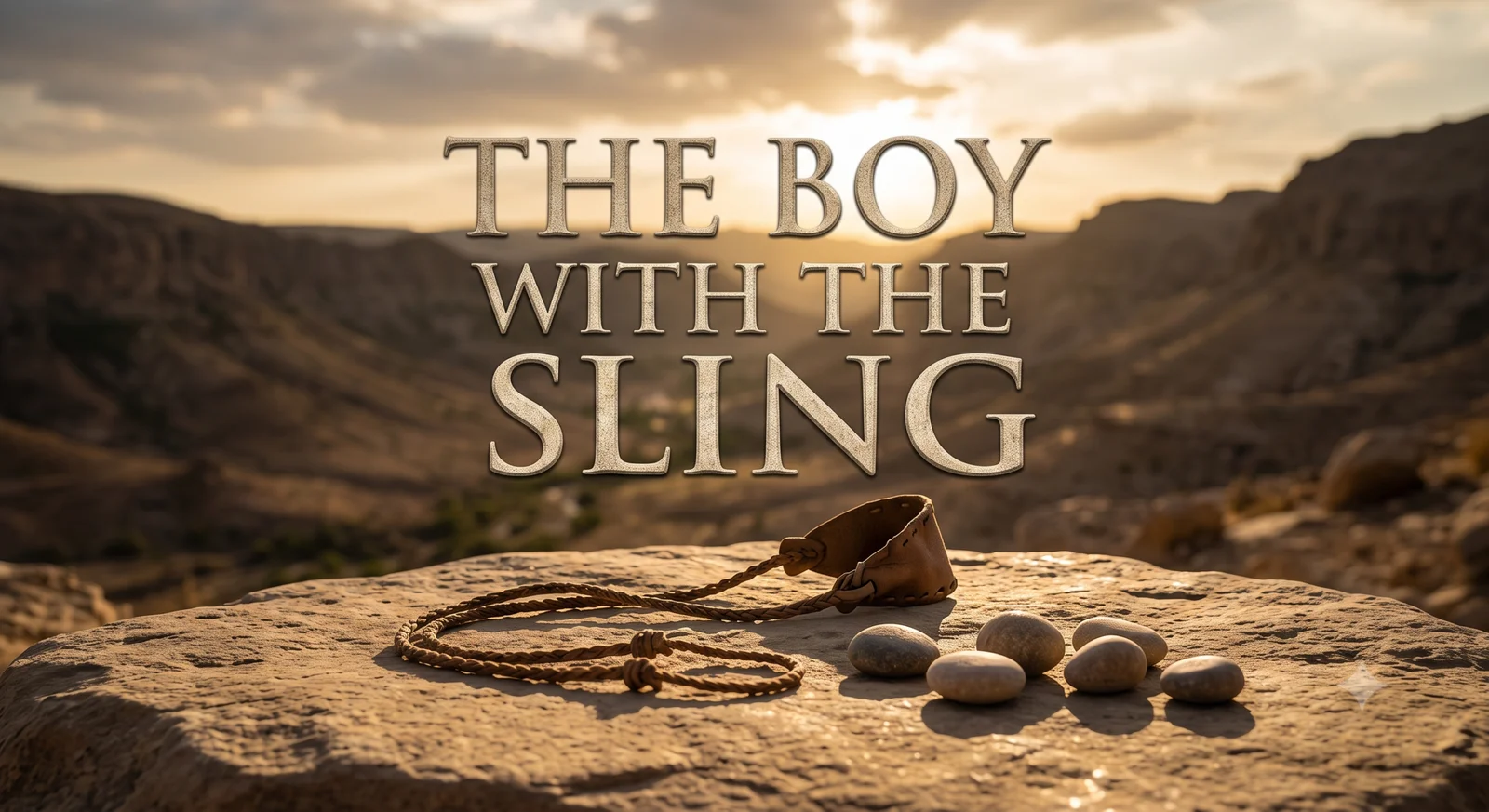
I love the story of David and Goliath. Since being a young boy, it has captivated me with its action and deeper meanings. I think that is why I keep returning to it.
You probably know how it goes. A young shepherd defeats a giant warrior. The underdog triumphs against impossible odds. The weak overcome the strong. We know the story so well that “David and Goliath” has become a phrase in its own right, used to describe any struggle between the powerless and the powerful.
For years, that is how I read it, too.
Recently, I returned to the text once again and found myself noticing details I had largely ignored before. They seemed small at first, almost incidental. The kind of details you skim over because they do not appear to advance the plot. But the more closely I examined them, the more they appeared to be doing exactly that.
In fact, they seemed to point to an entirely different way of reading the story.
The strange thing is that none of these details are hidden. They are sitting there in plain sight. We simply tend to focus on something else. Taken together, they suggest that the story is not primarily about David and Goliath at all.
The Giant Israel Already Had
The first detail appears long before Goliath enters the story.
When Saul is introduced in 1 Samuel, the narrator goes out of his way to tell us that he stood head and shoulders above everyone else in Israel. It is a curious detail to emphasise, but the author clearly wants us to notice it. Saul is physically impressive. He looks like a king and possesses the sort of stature people naturally associate with leadership, authority, and strength.
That matters because of what happens next.
When Goliath arrives, he dominates the narrative. He towers above the battlefield. His armour is intimidating. His weapons are formidable. Everything about him communicates power. We instinctively compare him with David because that is where the story eventually leads.
Yet the more obvious comparison is actually Saul.
Saul is the king. He is Israel’s military leader and the tallest man in the nation. If anyone should be stepping into the valley to answer Goliath’s challenge, it is Saul.
Instead, he remains where he is.
That changes the way the story feels. Suddenly, the question is not simply how David will defeat Goliath. The more pressing question becomes why Saul does not even try.
The contrast is impossible to ignore. Israel had asked for a king who looked impressive. They wanted someone who could stand alongside the rulers of the surrounding nations. Saul seemed to fit the role perfectly.
Yet when the defining test arrives, appearance proves to be a poor guide. The man who looks strongest is unable to act. The giant Israel already possesses cannot face the giant standing across the valley.
That is not simply a detail about Saul. It is part of a wider theme running through the whole of Scripture. Human beings are repeatedly drawn towards what looks impressive. We assume that visible strength will solve our problems. We instinctively place our confidence in people, institutions, resources, and abilities that appear powerful from the outside.
This story begins to dismantle that assumption.
The Armour That Never Leaves the Tent
The second detail is even easier to overlook.
Before David faces Goliath, Saul attempts to equip him with his own armour. It is a perfectly reasonable suggestion. David is young, and Goliath is a seasoned warrior. Any sensible person would want some form of protection before walking into such a confrontation.
David agrees to try it.
Then he takes it off.
Most explanations stop there. The armour is unfamiliar. It restricts his movement, and he is not accustomed to wearing it.
All of that is true. Yet I suspect something deeper is happening. The armour represents far more than military equipment. It represents Saul’s way of understanding the world. You wear the armour and fight like a soldier, trusting the methods everyone expects you to trust.
Seen from that perspective, the temptation facing David is not simply fear.
It is imitation.
The easiest thing in the world would have been to become a smaller version of Saul. To adopt the king’s methods, assumptions, and understanding of power. To accept the idea that victory depends upon looking and acting like everyone else expects.
But David refuses. Instead, he returns to the tools he already knows. The staff he carries as a shepherd and the sling he has used countless times. He gathers stones from the stream.
To everyone watching, this must have appeared absurd. One side possesses armour, swords, and military expertise. The other arrives carrying equipment associated with tending sheep. Yet the story keeps directing our attention away from appearances.
The deeper issue is not what David carries. The deeper issue is what David trusts.
Saul’s confidence rests on visible symbols of strength. David’s confidence rests in a God who has been present throughout the ordinary experiences of his life. When David recalls the lions and bears he has faced while protecting his flock, he is not boasting about his achievements. He is describing a history of dependence.
Long before the valley, God had been shaping him in more subtle ways.
The armour remains behind because the story is making a larger point. God’s purposes are rarely fulfilled by turning people into somebody else.
More often, they emerge through the person they have already been becoming.
The Battle Goliath Thought He Was Fighting
The third detail may be the most fascinating of all.
The narrative spends an extraordinary amount of time describing Goliath’s equipment. We are told about his helmet, his scale armour, his spear, his sword, and even the shield bearer who walks before him.
I found myself asking why so much detail? I concluded that it is because the description reveals what kind of battle Goliath expects.
For forty days, everyone has accepted those terms. The giant walks into the valley and defines the contest. Nobody questions it or imagines another possibility. The battle will be fought the way Goliath wants it fought, because Goliath appears to hold all the power.
Everything about his equipment points towards close combat.
He is prepared for a contest between warriors. Sword against sword. Armour against armour. Strength against strength. Then David arrives and refuses to participate in that kind of battle.
The more I think about it, the more remarkable this becomes.
David does not defeat Goliath by becoming stronger than Goliath. He does not defeat him by matching his strengths. He defeats him by refusing to accept the giant’s definition of the contest.
That helps explain Goliath’s reaction. He appears genuinely offended by David’s approach. The shepherd is not behaving according to the accepted rules and entering the sort of encounter everyone expected.
In many ways, Goliath loses before the battle even begins because he cannot imagine any other way of fighting.
The giant’s confidence is built upon assumptions that nobody around him has challenged. His size, his armour, and his experience have taught him to see the world in a particular way.
David sees something different.
He sees that the giant’s apparent strengths are not the whole story. He sees that what looks invincible may not actually be invincible at all.
Most importantly, he sees that the battle itself belongs to God.
What These Three Details Reveal
Individually, these observations are interesting.
Together, they reveal the deeper structure of the story. We often imagine that David and Goliath present two opposing figures. The text actually gives us three.
Saul.
David.
Goliath.
Each places confidence in something different.
Saul trusts status and appearance. He possesses the title, the position, and the outward qualities people associate with leadership.
Goliath trusts power. He relies upon military superiority, physical strength, and overwhelming force.
David trusts God.
That distinction sits at the centre of the narrative. The story does not deny the reality of power. Goliath really is dangerous. His weapons are real, and his size is intimidating. The threat facing Israel is genuine.
Neither does the story suggest that appearances are meaningless. Saul genuinely looks impressive. He possesses many of the qualities people naturally seek in a leader.
Yet both Saul and Goliath ultimately place their confidence in things that can only take them so far.
David operates from a different foundation altogether.
That is why one of the most important statements in the chapter comes when he declares that “the battle is the Lord’s.”
Everything else revolves around that conviction.
Why This Matters
What strikes me is that neither Saul nor Goliath are irrational. Saul’s trust in status makes sense. Goliath’s trust in strength makes sense. Most of us would probably make the same calculations. The story is not mocking them for being foolish. It is exposing the limits of what human beings naturally trust.
This is where we turn to our own experience and find that the story is surprisingly relevant.
We continue to live in a world fascinated by visible strength. We are impressed by status, influence, wealth, technology, expertise, and achievement. We naturally assume that the people who possess such things are best equipped to shape the future.
Sometimes they are.
Yet Scripture repeatedly warns us that appearances can be deceptive. The qualities we admire most are not always the qualities that matter most. The people who appear strongest are not always the people who are strongest. The resources we trust most are not always the resources capable of sustaining us.
That does not mean visible strengths have no value. Saul’s height was real. Goliath’s weapons were real, and the dangers facing Israel were real. The story simply refuses to allow those realities to have the final word.
Instead, it invites us to ask a more uncomfortable question.
Where does our confidence ultimately rest?
Because that is the question sitting beneath every single scene in the chapter. Is our understanding of reality large enough to include God?
Perhaps that is why the story continues to resonate after thousands of years.
Yes, it is a scene full of action and drama with an obvious moral message. Yet beneath all of that lies a much deeper challenge. The challenge to look beyond appearances and ask what we are truly trusting.
That, I suspect, is the hidden detail that changes the whole story. Not who the giant was, but what everyone was trusting














Comments (0)
Facebook Comments (0)