
Dealing With Guilt Consciousness
 admin
Nov 12, 2026
6
0

As a teenager, I believed God forgave my sins instantly. Unfortunately, I also seemed to believe that forgiveness took about three days to kick in.
I knew the theology. I’d grown up in church, heard countless sermons about grace, and could probably have quoted enough Bible verses about forgiveness to fill a small book. I knew that Jesus had died for my sins, that God was merciful, and that if I confessed what I’d done wrong, I could be confident that God had forgiven me. That’s what I’d been taught, and I believed every word of it.
There was just one problem. I never actually felt forgiven.
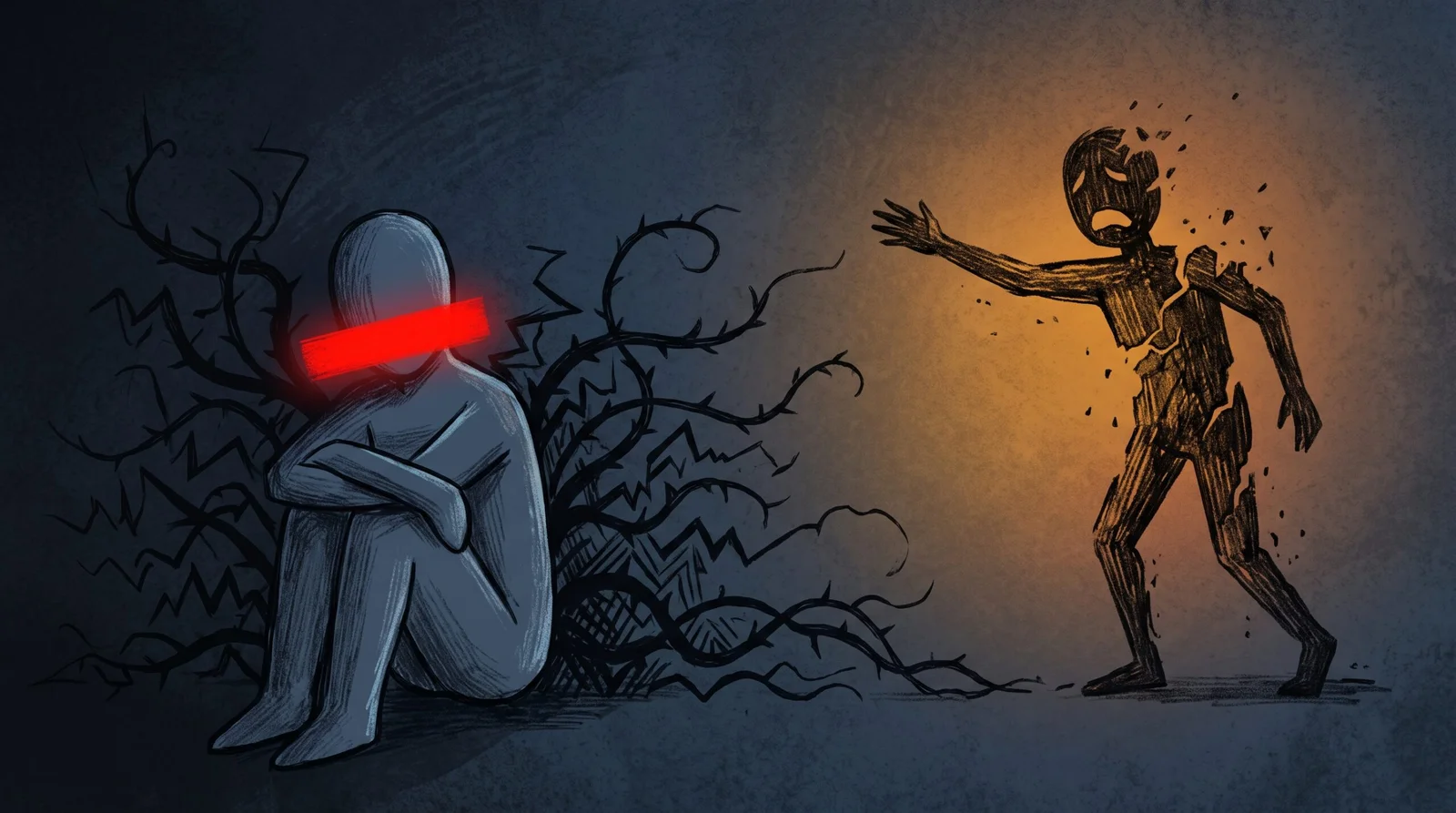
Whenever I did something I believed was sinful, I’d confess it to God, ask for forgiveness, and promise to do better. Sometimes I’d make the same promise several times, just to be sure. And while I understood that God had supposedly wiped the slate clean, I couldn’t shake the feeling that he was still a little disappointed in me. Perhaps even angry. I imagined that my relationship with God had somehow been damaged, and although forgiveness was technically available, things between us weren’t quite right.
The only thing that seemed to fix it was time.
If I managed to go a few days without committing whatever sin I’d been feeling guilty about, I’d gradually start to feel better. My prayers seemed more confident. I could worship without that nagging sense of hypocrisy. I felt closer to God again, as though the awkwardness between us had finally passed and he’d decided we could go back to normal.
Of course, if I slipped up again, the whole process started over.
Looking back, I can see that I’d developed a rather peculiar understanding of grace. I believed forgiveness was a free gift, but apparently God needed to see a few days of good behaviour before I could enjoy it. I would never have described it that way at the time, because earning God’s favour was precisely the sort of thing my church taught me I couldn’t do. Yet somehow, without realising it, I’d turned forgiveness into something that had to be earned through a sufficiently long period of being good.
And I suspect I wasn’t the only one.
There must be millions of Christians who know exactly what their Bible says about forgiveness, who genuinely believe God loves them, and who can explain the doctrine of grace perfectly well, yet still carry around a persistent sense of guilt. They confess, repent, pray, and promise to change, but the emotional relief they’re expecting never quite arrives. Some even end up feeling guilty about the fact that they still feel guilty, wondering whether their inability to experience forgiveness is itself evidence of some spiritual deficiency.
I spent years thinking the problem was me. I knew all the right things about forgiveness, so I couldn’t understand why I kept feeling this way. And since the church had taught me that God’s forgiveness was immediate and unconditional, I assumed that my lingering guilt was just another example of my inability to get this whole Christian thing right.
As it turns out, psychologists have been investigating precisely that gap. And what they’re discovering raises some fascinating questions about guilt, shame, our relationship with God, and why knowing we’re forgiven doesn’t always make us feel any less condemned.
How Long Does It Take to Feel Forgiven?
It turns out that the strange little waiting period I imposed on myself as a teenager might be more common than I realised.
In August 2026, researchers Richard Cowden of Harvard University and Kaye Cook of Gordon College published a
study in the journal Psychology of Religion and Spirituality
investigating what happens in the days following an experience of personal wrongdoing. They were particularly interested in something that Christian theology doesn’t always account for very well: the time it takes for someone to actually experience the forgiveness they believe God offers.
The researchers began by screening 2,481 practising Christians across the United States. They were looking for people who had done something within the previous 24 hours that they personally considered sinful and who, importantly, didn’t yet feel confident that God had forgiven them. Of those screened, 175 met the criteria and participated in the study.
The participants came from various Christian backgrounds, including Catholic, Baptist, and nondenominational churches. Their reported transgressions were also fairly ordinary. Around 22% involved something sexual, 21% involved anger or resentment, and 15% involved dishonesty or lying. In other words, these were the sorts of things Christians have been confessing to God for centuries.
Over the following 16 days, participants completed questionnaires on five separate occasions, describing how they felt about what they’d done, whether they had repented, whether they believed they had experienced God’s forgiveness, and how close they felt to God.
The results were fascinating.
For starters, people were generally pretty quick to repent, but considerably slower to feel forgiven. Even after they’d confessed their wrongdoing, the guilt often hung around for days, gradually easing rather than disappearing overnight. So, it turns out, I’m pretty normal!
But the most revealing finding was that how people felt about their relationship with God made a difference. Those who already felt close to God, without much tension in that relationship, tended to experience a greater increase in their sense of forgiveness.
Imagine you’ve upset a close friend. You apologise, they accept, and you move on. But now imagine you’ve upset your boss, who happens to be rather intimidating and has a habit of reminding everyone how disappointed he is in their performance. He tells you everything is fine, but you spend the next week interpreting every email, facial expression and meeting invitation as evidence that you’re about to be fired.
Same apology. Same acceptance. Very different experience.
So it turns out that our ability to feel forgiven by God may depend a great deal on how we view God in the first place.
I wonder how much of this comes down to what people hear in church every Sunday. You can spend forty minutes telling a congregation how sinful they are, how much God hates sin, and how deserving they are of punishment, and then finish with a reminder that God loves them unconditionally. But I wonder which part of that sermon people take home with them.
After all, if you’ve spent your whole life being told that even your best efforts are filthy rags in God’s sight, it’s going to be difficult to suddenly feel good about yourself just because someone reminds you that Jesus loves you.
And perhaps there’s something worth examining in the way we talk about forgiveness itself. Churches often put enormous effort into convincing people of their sinfulness, but considerably less into helping them work through the guilt and shame that can follow. We teach people that they’re forgiven and assume that should be enough. When they continue struggling, we tell them to trust God more, which can leave them feeling guilty about their inability to stop feeling guilty.
I can’t help wondering whether, for some Christians, the biggest obstacle to experiencing God’s forgiveness is the picture of God that Christianity has given them.
What Is Forgiveness Supposed to Feel Like?
Think about the last time someone forgave you for something. Perhaps you’d said something hurtful to your partner, lost your temper with your children, or let down a friend. You apologised, they accepted, and you were forgiven.
What did that feel like?
Perhaps you felt relieved, but I suspect you also felt a little embarrassed about what you’d done. You might have replayed the conversation in your head, wished you’d handled things differently, or continued feeling guilty long after the other person had moved on. Their forgiveness didn’t magically erase your memory of what happened, or make you feel wonderful about yourself.
And nobody would consider that particularly unusual. We understand that emotions can linger long after a disagreement has been resolved. We don’t generally assume that someone’s forgiveness has expired simply because we wake up the next morning still feeling bad about what we did.
Yet I wonder whether we expect something quite different when it comes to God.
We seem to imagine that divine forgiveness should arrive with some unmistakable emotional experience, perhaps a wonderful sense of peace, a lifting of guilt, or the sudden return of that warm, fuzzy feeling we associate with being close to God. And when none of that happens, we start questioning whether we’ve really been forgiven.
But there’s another difference between human forgiveness and divine forgiveness that I think is worth considering.
When I hurt another person, they might genuinely be shocked or upset by what I’ve done. They have their own feelings to process, and perhaps they’ll need some time before they’re ready to forgive me. That’s understandable. Relationships between human beings are messy, and forgiveness can be difficult.
But surely God is operating with a rather different perspective. If God knows us completely, then presumably he’s already well acquainted with our weaknesses, our terrible decisions, and our remarkable ability to make the same mistakes repeatedly. Nothing we confess is going to leave him staring at us in disbelief, wondering how we could possibly have done such a thing.
I rather like the thought that God has never once had to say, “Well, I certainly didn’t see THAT coming.”
Perhaps my teenage mistake was imagining that God needed time to get over what I’d done, when I was actually the one struggling to get over it. I was interpreting my own lingering guilt as evidence of his displeasure, even though the theology I’d been taught insisted that his forgiveness was freely given.
I wish I’d understood that when I was younger. I could have saved myself an awful lot of unnecessary apologising. God had heard me the first time, and I doubt he was sitting around waiting for me to finally feel better about myself before deciding we were okay.
So, Cut Yourself Some Slack
I’ve come to wonder whether a lot of the time we spend waiting to feel forgiven by God is actually time spent waiting to forgive ourselves.
After all, we can be remarkably unforgiving towards ourselves. We replay stupid things we’ve said, cringe at decisions we’ve made, and occasionally lie awake at two in the morning remembering something embarrassing we did in 2007. We hold ourselves to standards we’d never dream of imposing on someone we love, and when we fall short, we can be absolutely ruthless.
And perhaps we’ve been mistaking that harsh inner critic for the voice of God.
I think there’s a difference between taking responsibility for something we’ve done and continuing to punish ourselves for it. If you’ve hurt somebody, apologise. If you’ve caused damage, do what you can to repair it. If there’s something in your life that needs to change, work on changing it. Forgiveness doesn’t excuse us from any of that. But I’m increasingly unconvinced that feeling terrible about ourselves for another three days makes us better people, or achieves anything particularly useful.
In fact, I wonder whether some of us have become so accustomed to feeling guilty that we almost distrust ourselves when we don’t. We worry that moving on too quickly means we aren’t taking our wrongdoing seriously enough, as though the length of our suffering is somehow proof of the sincerity of our repentance.
I wish I could sit down with my teenage self and explain all this. I’d probably tell him that he was going to make plenty more mistakes, including some considerably bigger ones, and that spending half his life feeling dreadful about them wasn’t going to prevent the other half. He could learn from his mistakes, make things right where necessary, and then get on with living.
And perhaps I’d remind him of something he already believed but hadn’t quite worked out how to live with: if God’s forgiveness really is a gift, there’s no need to spend the next three days trying to pay for it.
So cut yourself some slack. You’ve probably been harder on yourself than God ever was.











Comments (0)
Facebook Comments (0)