
Why The Righteous Suffer
 admin
Nov 10, 2026
1
0
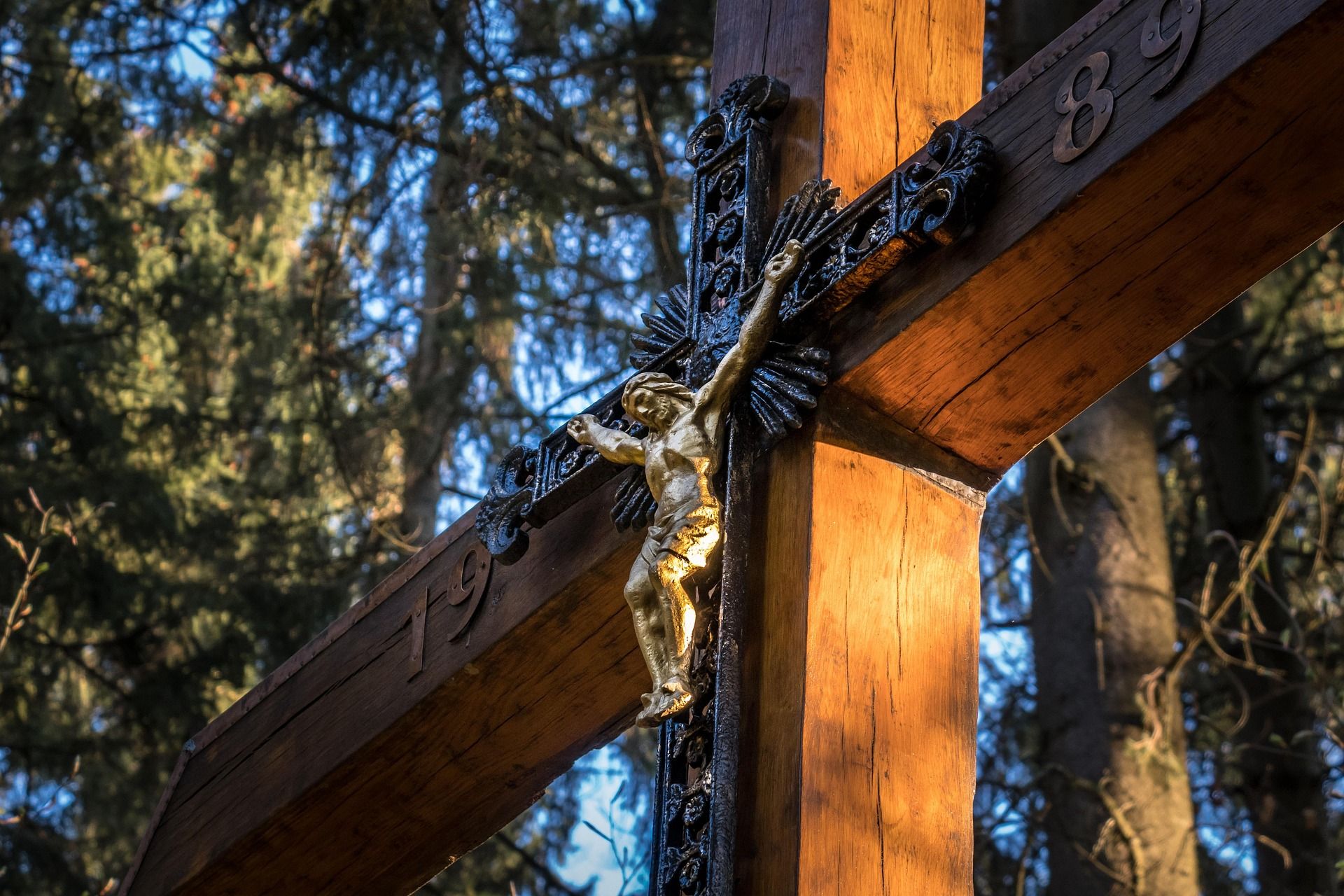
Even a good Christian who is full of the Holy Spirit can find himself positioned or aligned against God if he or she allows his or her personal ambition, feelings, quest for popularity, or inordinate sense of importance get in the way.
One of Judah’s most faithful kings died because he ignored a warning from God.
If that is uncomfortable to read, it becomes stranger when you realise who delivered the warning. It was an Egyptian Pharaoh.
Near the end of Josiah’s reign, Pharaoh Neco was marching north with his army. Josiah went out to confront him, and Neco sent messengers with a remarkably blunt warning: this fight was not with Judah; God had told him to hurry, and Josiah should not interfere.
Josiah ignored him. The writer of Chronicles then adds a sentence that changes the whole story:
“Josiah, however, would not turn away from him, but disguised himself to engage him in battle. He would not listen to what Neco had said at God’s command.”
Depending on the translation, the final phrase is even more remarkable. Josiah failed to listen to words that came “from the mouth of God.” He went into battle anyway, archers struck him, his servants carried him away and, not long afterwards, one of the most celebrated kings in Judah’s history was dead.
I think the story would be easier if Josiah had been a terrible king, but the truth is he wasn't.
The king who got almost everything right
Josiah is one of the Bible’s great reforming kings.
He comes to the throne as a child and, as he grows, begins dismantling the religious practices that had led Judah far from the worship of God. He orders repairs to the Temple, and during that work a book of the Law is discovered. When it is read to him, Josiah is devastated by how far his people have wandered.
His response is not defensive, nor does he explain the uncomfortable parts away or accuse the priests of exaggerating. He tears his robes, seeks guidance, and immediately begins a programme of reform. Altars are removed, idols are destroyed, and the Temple is restored. The Passover is celebrated on a scale the biblical writer says had not been seen for generations.
The writer of Kings gives Josiah an extraordinary assessment:
“Neither before nor after Josiah was there a king like him who turned to the Lord as he did.”
That really matters, because it prevents us from dismissing what happens next as the inevitable end of a secretly corrupt man. Josiah had spent much of his life trying to listen to God. Then, at the moment when listening mattered most, something went terribly wrong.
A war that was not really his
The political situation around Judah was changing rapidly.
Assyria, the empire that had dominated the region for generations, was collapsing. Babylon was rising. Egypt, under Pharaoh Necho II, marched north to support what remained of Assyrian power against Babylon. Josiah intercepted him at Megiddo. Why?
The Bible never tells us.
Historians have suggested several possibilities. Josiah may have wanted to stop Egypt helping Assyria, or he may have sympathised with Babylon. Perhaps he feared renewed Egyptian control in the region or saw an opportunity to protect the independence Judah had gained as Assyria weakened. All of those possibilities make sense. None can be proved.
What Chronicles does tell us is that Neco tried to stop the confrontation before it began. More surprisingly, he claims that God has ordered him to move quickly and warns Josiah not to oppose what God is doing. At that point, Josiah faced an extraordinary problem.
How exactly was he supposed to know whether an Egyptian Pharaoh was telling the truth about God?
That question is worth pausing for. If somebody opposing us announced that God was on their side, most of us would be cautious, and probably rightly so. Religious language has been used to justify almost everything human beings have wanted to do, including wars.
Neco’s claim could easily have sounded like political theatre. Except the Chronicler tells us it wasn’t.
The uncomfortable sentence
This is the detail I keep returning to.
Neco says God has spoken to him, but the biblical writer does not leave the claim hanging in the air. He explicitly tells us that Josiah failed to listen to Neco’s words “from the mouth of God.” In other words, as Chronicles tells it, the warning was genuine.
God really was speaking through an Egyptian king.
There is an interesting clue to how uncomfortable later readers found this. In another ancient retelling of the story, 1 Esdras, Josiah is said to have ignored words from the prophet Jeremiah. It is almost as though the problem has been tidied up slightly. A message from God arriving through Jeremiah feels much safer than one arriving through Pharaoh.
But Chronicles refuses to make it that comfortable. The message does not arrive through a priest Josiah trusts, a prophet whose credentials are obvious, or someone from his own religious world. It arrives through Neco.
We should be careful here. The text never tells us Josiah rejected the warning because Neco was foreign. We do not know what was going through his mind. Perhaps Josiah thought the Pharaoh was bluffing, or that he was too committed to his political strategy to change course. Perhaps he genuinely believed confronting Egypt was the right thing to do.
Whatever his reasoning, he did not listen, and that makes the story harder, not easier.
An ending that sounds strangely familiar
There is another detail in Chronicles that makes Josiah’s death even more problematic.
He disguises himself before entering battle. If that sounds familiar, it should.
Earlier in the biblical story, King Ahab also receives a warning before battle. He ignores it, disguises himself, and enters the fighting anyway. An arrow finds him, and he dies from his wound. Ahab is hardly remembered as a model of faithfulness.
Josiah is.
Yet Chronicles tells the final battle of this good king in language that seems deliberately to echo the death of one of Israel’s worst. The similarity is not exact, and scholars disagree over how deliberately the Chronicler shaped the account. But the resemblance is difficult to ignore: a warning, refusal, disguise, archers, a wounded king and a chariot carrying him away from battle.
It all feels very sad. Josiah had spent years pulling down the things Ahab’s world represented. Yet in one terrible moment, Josiah’s story begins to resemble Ahab’s. Not because the rest of Josiah’s life was a lie, but because faithful people can still get things wrong.
Faithfulness is not the same as infallibility.
I suspect most of us are comfortable admitting that we can make mistakes in areas we know little about.
What is harder is admitting that experience can sometimes make us more certain than we should be. We know this subject; after all, we have been doing this for years. We have prayed about it, thought carefully, and we know what we believe. Somewhere along the way, confidence can stop being a tool and become a shield.
Don’t get me wrong, that does not mean conviction is bad. Josiah’s reforms required enormous conviction. Without it, he would probably never have challenged practices that had become normal in Judah. But the same person who once heard an uncomfortable word and responded with humility later heard another uncomfortable word and continued towards battle.
Perhaps that is the most challenging part of the story for me.
Past faithfulness did not guarantee perfect discernment. Josiah’s knowledge of God did not make every future judgement correct. His previous obedience did not mean that whatever he decided next must also be God’s will.
I can see why we prefer cleaner stories. We like faithful people to make faithful choices and foolish people to make foolish ones. It helps us know where to stand.
The Bible is much less tidy.
The mistake was not the whole life.
Yet Chronicles does something else that I think matters. It does not finish by turning Josiah into a warning label about listening to God.
When the king dies, Judah and Jerusalem mourn him. Jeremiah composes laments for him. The Chronicler ends by referring again to Josiah’s acts of devotion. That is a remarkably generous way to tell the story.
Josiah made a disastrous decision. The writer does not hide it, soften it, or pretend the consequences were insignificant. But neither does that final mistake become the only thing we are allowed to remember about him.
I think there is something deeply human about that.
We are very good at allowing one moment to eclipse an entire life. One failure, a terrible judgment, or something somebody wishes they had done differently can become the lens through which everything else is viewed.
Chronicles refuses to do that to Josiah. He was faithful, and he was wrong. Both things are allowed to remain true.
I think that is why I find his death more moving than many of the cleaner biblical endings. Josiah does not finish his life with a perfect final speech or a triumphant victory. He dies because of a decision the Chronicler believes he should not have made.
Yet people grieve him because they remember the man who lived before that moment: the king who restored the Temple, the king who listened when the Law concerned him, the king who tried to turn his people back towards God. And, finally, the king who did not listen.
I am not sure the story gives us a simple method for recognising God’s voice. If anything, it makes me suspicious of claims that recognising God’s voice is ever quite that simple.
Faithfulness does not make us incapable of being wrong. Certainty does not prove we have heard God correctly. Sometimes wisdom may begin with leaving just enough room for the possibility that the voice we are tempted to dismiss has something we need to hear.
Josiah spent much of his life listening. At Megiddo, he did not. The Bible still remembers him as a faithful king, and perhaps that is what makes his ending so tragic.










Comments (0)
Facebook Comments (0)